
Paris has long been a city of romance, art, and freedom-but beneath its polished surface, the world of escorting has quietly evolved. What was once hidden in back alleys and anonymous phone numbers is now shifting toward something more structured, more visible, and far more complicated. By 2030, the escort scene in Paris won’t look anything like it did a decade ago. And if you’re wondering what’s coming next, you’re not alone.
It’s Not About Prostitution Anymore
The biggest shift? The line between escorting and prostitution is blurring-then disappearing. French law doesn’t criminalize selling sex, but it does punish clients. That’s meant that independent escorts have learned to operate in gray zones. They don’t offer sex for cash directly. Instead, they offer companionship: dinner, museum tours, event dates, late-night conversations. The money is for time, not touch. And that’s how they stay legal.
Over 68% of registered escort profiles in Paris now list “companion services” as their primary offering, according to internal data from two major French escort platforms. That number was under 30% in 2020. Clients aren’t just looking for sex. They’re looking for connection, confidence, or escape. A 42-year-old tech executive from Lyon told a journalist in 2025, “I don’t need a hooker. I need someone who knows how to talk about Picasso, remembers my coffee order, and doesn’t ask me why I’m alone in Paris.”
Digital Platforms Are Rewriting the Rules
Remember when you called a number, got a voice mail, and hoped the person would call back? That’s over. Today, Parisian escorts run polished websites, use encrypted messaging apps, and maintain Instagram profiles that look like boutique travel blogs. Some even have TikTok accounts with behind-the-scenes clips of café visits or gallery walks-no nudity, no explicit content, just vibe.
Platforms like ParisCompanions a French-based digital platform connecting clients with vetted companions in Paris, offering personalized services ranging from cultural tours to private dinners and Liaison Paris an escort service platform that emphasizes discretion, client safety, and professional standards for companions in the French capital have become the new agencies. They screen workers, handle payments, and even offer training in communication, boundary-setting, and personal branding. Some offer certified “Companion Diplomas” after 10 hours of workshops on etiquette, emotional intelligence, and French law.
These platforms don’t just list profiles-they curate them. Clients filter by language spoken, interests (wine tasting? classical music? hiking in the Bois de Boulogne?), and even personality type (introvert-friendly? extrovert energy?). It’s like dating apps, but with higher stakes and clearer rules.
Who’s Hiring-and Who’s Being Hired?
The demographics have flipped. In 2018, most escorts in Paris were women in their 20s. Today, the average age is 34. More men are entering the field. More non-French nationals. More people with degrees in psychology, theater, or international relations. One escort, who goes by “Claire,” holds a master’s in sociology and uses her background to help clients process loneliness. “I’m not a fantasy,” she says. “I’m a mirror.”
Foreign clients make up over 40% of demand now. Russians, Americans, Saudis, and Japanese travelers are the biggest spenders. Many come for business, stay for connection. They don’t want to be seen in a nightclub. They want a quiet dinner at Le Comptoir du Relais, followed by a walk along the Seine with someone who knows the history of every bridge.
And the workers? They’re smarter, more professional, and more protected. Many now carry liability insurance. Some have private lawyers on retainer. A few even have HR-style contracts outlining hours, fees, and cancellation policies. It’s not glamorous-but it’s sustainable.

The Legal Tightrope Gets Tighter
France’s government hasn’t changed its laws, but enforcement has. In 2024, the Paris police launched a pilot program called “Operation Vérité”-targeting not escorts, but websites that facilitate explicit transactions. Over 120 domains were shut down in six months. But here’s the twist: legitimate companion platforms were not touched. Why? Because they don’t mention sex. They don’t take cash. They use encrypted payment gateways. They require photo ID from both parties.
Now, the Ministry of Justice is considering a new classification: “Professional Companionship.” If passed, it would allow registered individuals to legally operate under a business license, pay taxes, and receive social protections. Think of it like freelance photography or private tutoring-but for emotional and social presence.
Opponents say it’s legalizing prostitution in disguise. Supporters argue it’s about dignity. “If someone chooses to earn money by being present, attentive, and kind,” says lawyer Élodie Martin, “why should the state punish them for it?”
What Clients Will Want in 2030
Future demand won’t be for physical intimacy. It’ll be for emotional calibration.
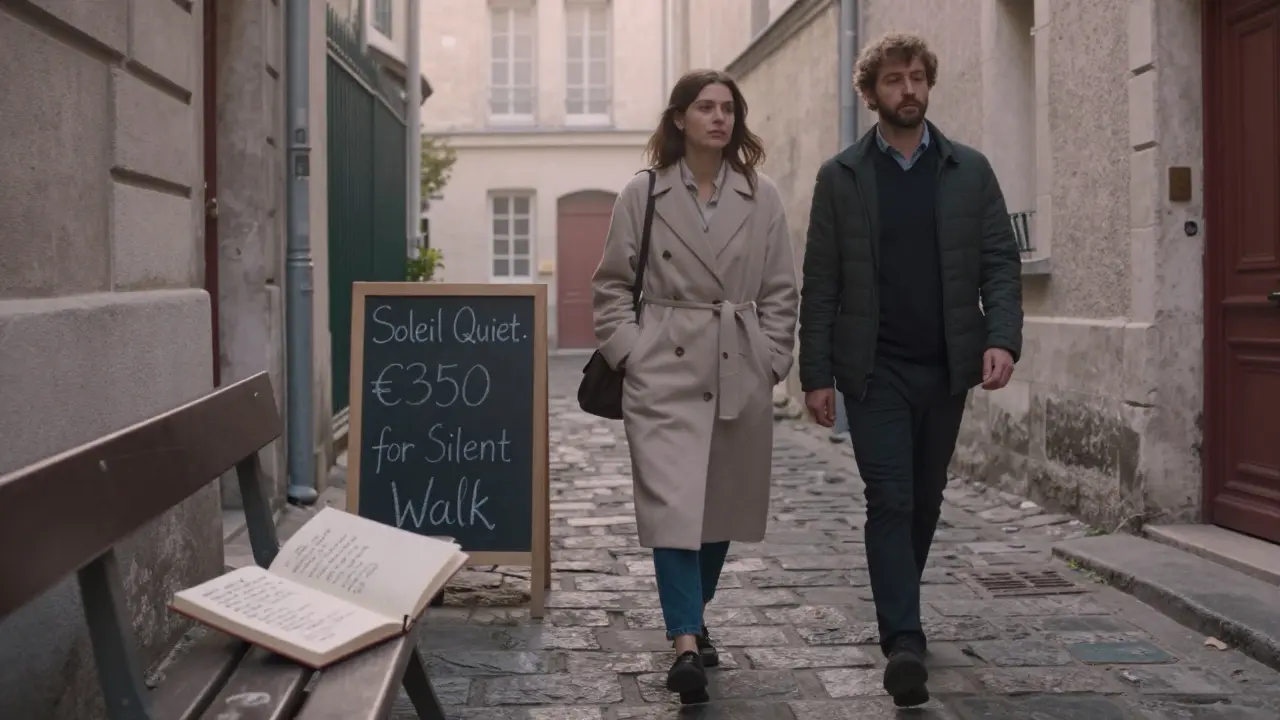
Imagine booking a “Paris Reset”: a 4-hour experience where you’re taken to quiet bookshops, shown hidden courtyards, and listened to without judgment. No kissing. No touching. Just presence. That’s already happening. One service, called Soleil Quiet a Paris-based companion service offering non-sexual, mindfulness-focused experiences for clients seeking emotional respite and cultural immersion, charges €350 for a “silent walk” through Montmartre with a trained companion who doesn’t speak unless spoken to.
Corporate clients are demanding “executive companions”-people who can accompany CEOs on business trips, attend dinners with clients, and read the room without saying a word. Some even hire escorts as cultural liaisons for international clients who don’t understand French social cues.
And then there’s the rise of “memory companions.” People hire someone to relive a moment with them: a first kiss, a lost loved one’s favorite café, a childhood memory. It’s therapy disguised as companionship. And it’s growing fast.
The Risks Are Real
None of this is without danger. Scammers still exist. Fake profiles. Stolen photos. Clients who refuse to pay. Some escorts report harassment from neighbors or landlords who discover what they do. Others face stigma from family or former colleagues.
And while the legal gray zone protects many, it leaves others exposed. If a client files a complaint-or if a photo leaks-the escort can lose everything. No safety net. No unemployment. No recourse.
That’s why the most successful escorts now work in collectives. Three or four women (or men) share an office, a lawyer, a booking system, and emergency contacts. It’s not a company. It’s a support network. And it’s becoming the norm.
What’s Next? Three Predictions
- Regulation will come-but not how you think. France won’t legalize prostitution. But it will create a legal category for “emotional labor services,” allowing companions to register, pay taxes, and access healthcare.
- AI will replace low-end services. Chatbots and voice assistants will handle basic requests: “Find me someone to go to the opera with.” But they won’t replace human connection. People still want real eyes, real laughter, real silence.
- Paris will become a global hub for professional companionship. With its culture, language, and history, it’s the only city in Europe where this model can thrive. Expect training centers, certification programs, and even international conferences by 2028.
Final Thought: It’s Not About Sex. It’s About Being Seen.
The future of escorting in Paris isn’t about bodies. It’s about presence. It’s about someone who shows up-not to perform, but to hold space. To remember your name. To know when to talk and when to stay quiet. To make you feel like you’re not alone in a city of millions.
That’s not prostitution. That’s humanity. And it’s not going away.
Is escorting legal in Paris?
In France, selling sexual services is not illegal, but paying for them is. That’s why most professional companions in Paris now operate under the legal umbrella of “companion services.” They charge for time, conversation, and presence-not sexual acts. As long as no explicit exchange of sex for money occurs, the service remains within the law. Many now use contracts, digital payments, and verified profiles to stay compliant.
Can foreigners hire escorts in Paris?
Yes, and they do-often in large numbers. Tourists from the U.S., Russia, Japan, and the Middle East make up a significant portion of clients. Many come for business, travel alone, and seek cultural or emotional connection. Reputable platforms require ID verification for both clients and companions, and most transactions are handled digitally to ensure traceability and safety.
Are escort services in Paris only for men?
No. While the majority of clients are men, demand from women and non-binary individuals has grown sharply since 2022. Women hire companions for everything from attending events to processing grief or loneliness. Male companions are also increasingly common, especially for clients who prefer same-gender interaction. The market is diversifying fast.
How do I know if an escort service is legitimate?
Legitimate services use professional websites with clear terms, verified profiles, and encrypted payment systems. They don’t ask for cash on arrival. They don’t pressure you for explicit requests. They offer detailed bios, client reviews, and often include background checks. Avoid services that use vague language like “private meetings” or “special services.” Look for transparency: real names (first names), photos taken in public spaces, and clear service descriptions.
What’s the difference between an escort and a prostitute in Paris?
Legally, the difference is in the transaction. A prostitute exchanges sex for money-this is illegal for the buyer. An escort exchanges time, company, and emotional labor for money-this is not illegal. In practice, escorts avoid physical intimacy to stay protected. Many offer activities like dining, sightseeing, or conversation. The line is blurry, but the intent and structure matter more than the label.